Beatles for Mandolin Curriculum (March 20-June 2)
By Theme Admin on January 27th, 2018 at 11:00 PM

“Your course was exactly what I have been looking for. It was well structured with a ton of good material. I like that fact that we were given tunes to learn but also tools that allows me expand the lessons beyond the course tunes to others that I already know.”—Todd M.
“This was the best online learning experience I’ve ever had. And, for the time and money, the best music learning experience in any format: DVD, video, group, or individual live lessons.”—Christine R.
Register for the Beatles for Mandolin course for $225 (that’s about $14 per class session)
See the Celtic Mandolin Curriculum.
See the New Acoustic Mandolin Curriculum.
Welcome to Beatles for Mandolin with Matt Flinner! This course will explore the songs of the Beatles while enabling students to learn more about mandolin technique, be more versatile in various styles of playing, and have a whole lot of fun along the way. The course will focus on a few main areas: learning various rhythms with a consistent picking hand technique, learning new ways of playing chords, strengthening fundamentals such as picking and fingering, and getting to know the fretboard better in various keys—as well as learning some great tunes along the way.
Each week, students will be given exercises related to picking technique, chords, licks or double stops, along with a couple of (mostly) familiar Beatles songs. Students will also be given a simple “riff” tune each week (though they’ll gradually get more complicated over the 8-week course) to explore the fingerboard with in various keys. The goal is to get students to strengthen their fundamental technique, learn more about the fretboard, get better at playing by ear—and do all of the above in a fun way.
The course will run from March 20 to June 2, with class sessions on Tuesday evenings at 9 pm eastern time and follow-up practice/review sessions on Saturdays at 11 am eastern time.
The course fee is $225. Register here
Here is the schedule:
WEEK 1
Rhythmic Patterns
Rhythm Exercise I
Rhythm Exercise II
A Bit of Soloing
All My Loving
Please Please Me
Riff: Love Me Do
WEEK 2
Rock & Roll Rhythm
Rhythm Exercise III
Down-picking Exercise
Twist and Shout
Revolution
Riff: Birthday
WEEK 3
Using Double Stops in Soloing
Double Stop Exercise I
Diatonic Double Stops
Chord Inversions
This Boy
Two of Us
Riff: Day Tripper
WEEK 4
Blues in Rock
Blues Scales
I’m Down
Drive My Car
Riff: Hey Bulldog
WEEK 5
Various Picking Patterns
Picking Exercise II
Picking Exercise III
Here Comes the Sun
Because
Riff: Paperback Writer
WEEK 6
Mixing Meters
Strumming Patterns in Mixed Meters
Lucy in the Sky with Diamonds
Good Day Sunshine
Riff: In My Life
WEEK 7
Diatonic Chords
Diatonic Chords in G Major
Blackbird
Here There and Everywhere
Riff: I Feel Fine
WEEK 8
More Complex Chord Progressions
More Chord Inversions
Chord Tones in Soloing
Strawberry Fields Forever
Yesterday
Riff: Norwegian Wood
New Acoustic Mandolin Curriculum (March 21-May 26)
By Theme Admin on January 26th, 2018 at 4:26 PM
“I have done some online courses, some one-on-one instruction and some camps. The course I just finished with you has been the most useful by a pretty large margin. Thanks for both the thought and effort that went into the design and material preparation and for the personal presence you bring to it.”—Steve F.
“I got a lot out of it! Everyday I have a practice routine based of the summer intensive. You have helped me by leaps and bounds.”—Sandy N.
Register for the New Acoustic Mandolin course for $225 (that’s about $14 per class session)
See the Celtic Mandolin Curriculum.
See the Beatles for Mandolin Curriculum.
“New Acoustic” music has come a long way since it first started up some 40 years ago. What was started by the likes of David Grisman and Sam Bush in the 1970s as an outgrowth of bluegrass and jazz has grown into a wide-ranging music incorporating elements of rock and roll, folk music, old-time music and more. We’ll explore this modern frontier of music and give students many of the tools they’ll need to play the tunes as well as improvise and play backup in new ways with new rhythms.
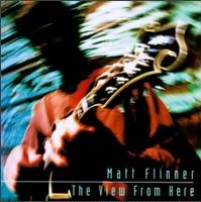
Spring of 2018 marks the 20th anniversary of the release of Matt Flinner’s “The View from Here” CD, which is regarded by many as a landmark album in New Acoustic music. Eight of the tunes from this CD will be covered, along with several other tunes from Flinner’s solo albums as well as Phillips, Grier and Flinner and Matt Flinner Trio albums. The styles of other New Acoustic players will also be covered, and a wide range of tunes will be studied in order to give students a better understanding of how to approach various tunes in Newgrass and New Acoustic Music.
This course runs from March 21-May 26. Classes take place on Wednesday evenings at 9 pm, and follow-up practice sessions take place on Saturdays at 12:15 pm eastern time. While it is recommended, students do not need to be present for the live sessions, as all sessions are recorded and available to view by the following day. Students may also download all class sessions and watch them offline at their convenience.
This course is recommended for students at an intermediate to advanced level.
The course fee is $225. Sign up here
WEEK 1
New Fiddle Tunes
Slightly more complex chord progressions
Variations using octaves and chord tones
Black’s Fork
The View from Here
WEEK 2
Rock-influenced rhythms and patterns
Rhythmic pattern I
Two bluesy licks
Cold Quarters
Nowthen
WEEK 3
Picking Patterns
Picking Exercise I
Picking Exercise II
Some positions up the neck
Suggestions for improvisation
A New Leaf
City Chickens
WEEK 4
More improvising
Mixolydian and Dorian modes
Melodic patterns
A few minor licks
Paint It Shut
The Narrows
WEEK 5
New Acoustic rhythms
Going between 4/4 and 3/4
Rhythmic exercise II
Wilson Bridge
Another Alley
WEEK 6
Major 7, Dominant 7 and Minor 7 chord forms
Diatonic 4-note chord exercise
Some David Grisman rhythms and licks
Ice Queen
Shiny Blue
WEEK 7
More rock and funk rhythms
Some Sam Bush grooves and licks
Quartal chord forms
Men from Boise
Half Moondog
WEEK 8
Advanced chord progressions
Using chord tones
More melodic patterns
Using various grooves in a tune
Miasma
Red Shift
Mandolin Practice Techniques; 5-Day Courses to Help You Improve Your Playing
By Theme Admin on December 3rd, 2017 at 3:59 AM
“All your courses are really good, very well designed, and you have a great teaching style and a relaxed, open, while also serious, approach – which really comes across with the live lessons – thank you for being so encouraging always!”–-Penny J.
“After buying six mandolins and umpteen books…I am convinced your course is best $100 I have invested in my mandolin journey to date. Finally, I’m getting the discpline I need with your exercises to learn scales, arpeggios, double stops, fingering techniques, learn the fretboard (the essential tools I need)…and most importantly to learn how those things fit into playing tunes.” —Rick D.
Register here for Week 1 (January 2-6)
Register here for Week 2 (January 8-12)
Register here for Week 3 (January 22-26)
Register here for Week 4 (January 29-February 2)
Join Matt Flinner for a series of 5-day courses this winter which are geared toward helping the aspiring mandolin student practice more efficiently and improve their playing skills more quickly. Every day for five days, students will run through a series of exercises and one tune, with Matt guiding them in a live 30-minute online practice session. Students who are unable to make the live sessions can view them later that day or evening on the class website, as all sessions will be recorded.
Students will be given exercises in the following areas: picking exercises, arpeggios, scales, fingering exercises, double stops, and a tune for the week. Students will receive the materials in PDF form four weeks ahead of time (or whenever they sign up) so that they have a chance to learn them before the course begins. Matt will then guide them through daily practice sessions for five straight days, giving them tips on how to improve and how to practice more effectively.
All class sessions take place from 10-10:30 am eastern time, except for the January 6 session (at the end of week 1), which will take place from 11-11:30 am eastern time.
The four weeks’ courses are different from one another, with different materials and a different tune being given for each week. Students can take any single course on its own or take any combination of courses to establish a routine and build on knowledge from one course to the next.
The registration fee for each course is $40.
Students can view all materials (videos and PDFs) on a class website any time, and they can also download and keep all PDFs and videos (including recordings of the class sessions) to practice with on their own time if they wish to.
Register here for Week 1 (January 2-6)
Register here for Week 2 (January 8-12)
Register here for Week 3 (January 22-26)
Register here for Week 4 (January 29-February 2)
WEEK 1 Curriculum (1/2-1/6)
Picking Exercise I
Fingering Exercise I
Double Stop Exercise I in G
Scales and Patterns in G
Major 7 Arpeggio Exercise
Lick #1 in All Keys
Tune: Leather Britches
WEEK 2 Curriculum (1/8-1/12)
Picking Exercise II
Fingering Exercise II
Double Stop Exercise II in D
Scales and Patterns in D
Dominant 7 Arpeggio Exercise
Lick #2 in All Keys
Tune: Cotton Eyed Joe
WEEK 3 Curriculum (1/22-1/26)
Picking Exercise III
Fingering Exercise III
Double Stop Exercise III in A
Scales and Patterns in A
Minor 7 Arpeggio Exercise
Lick #3 in All Keys
Tune: The Kitchen Girl
WEEK 4 Curriculum (1/29-2/2)
Picking Exercise IV
Fingering Exercise IV
Double Stop Exercise IV in C
Scales and Patterns in C
I-IV-V Arpeggio Exercise
Lick #4 in All Keys
Tune: Shady Grove (in C Major)
Questions? Contact Matt at [email protected]
Winter Courses Include Bill Monroe Tunes, Crosspicking Mandolin and Appalachian Tunes and Techniques
By Theme Admin on November 16th, 2017 at 7:56 PM
“This was the best online learning experience I’ve ever had. And, for the time and money, the best music learning experience in any format: DVD, video, group, or individual live lessons.”—Christine R.
“Your course was exactly what I have been looking for. It was well structured with a ton of good material. I like that fact that we were given tunes to learn but also tools that allows me expand the lessons beyond the course tunes to others that I already know.”—Todd M.
Want to buy a course for a special friend for the holidays? Get a gift card for any course for just $200 ($25 off).
Bill Monroe Tunes for Mandolin Curriculum
Crosspicking Mandolin Curriculum
Appalachian Tunes and Techniques Curriculum
The Bluegrass Mandolin 101 program is pleased to offer three new courses for a variety of ability levels and interests! Bill Monroe Tunes for Mandolin, Crosspicking Mandolin and Appalachian Mandolin Tunes and Techniques will start up January 8, 9 and 10.
Bill Monroe Tunes for Mandolin (Jan 8-March 10) will cover many of the well-known and lesser-known tunes by the greatest mandolin tune writer, Bill Monroe. Each week, students will be given two tunes relating to various aspects of technique, along with several exercises and suggestions for playing backup and creating variations on the tunes. The course is intended for players at an intemediate level, though advanced players as well as advanced beginners can benefit from the exploration of fundamentals to strengthen technique (plus learn some tunes they didn’t know before!). Register here.
Crosspicking Mandolin (Jan 8-March 10) dives into the intricate, beautiful style pioneered by the great mandolinist Jesse McReynolds. Material will focus on various crosspicking patterns and double stops and positions in various keys to create unique and often intricate solos on bluegrass standard songs. It’s a great way to add some color and flair to your playing! This course is recommended for intermediate to advanced players. Register here.
Appalachian Mandolin Tunes and Techniques (Jan 10-March 10) explores the deep groove of old-time fiddle tunes. Fundamentals will be emphasized, as students will get tips and exercises to help them improve their rhythm, picking and tone. The course is intended for students at a beginner to intermediate level. More advanced students may benefit from the tone exercises and focus on fundamentals (plus learn some great tunes!). Register here.
SCHEDULE:
60-minute classes take place online every Monday (Monroe Tunes), Tuesday (Crosspicking) or Wednesday (Appalachian Tunes) evening from January 8, 9 or 10 to March 5, 6 or 7 at 9 pm eastern time, and 45-minute practice/review sessions take place every Saturday morning/afternoon from January 13 to March 10. The week of February 5 is off due to Matt’s touring schedule.
NOTE: It is helpful, but not essential, to be present for the live sessions. All class sessions are recorded and available to view on the class website by the following day.
WHAT STUDENTS GET FROM THE COURSE
All students will also have unlimited access to short recorded videos of all of the material played at a slow tempo, PDFs of all material in both standard notation and mandolin tablature, and mp3s of all of the tunes at slow and medium speeds that they can practice along with. Students can access all of this material at any time through the class website, and can also download all materials (videos and class session videos included) to keep them permanently. All class sessions and practice/review sessions are recorded and posted on the class website (usually by the following day) so that students who were unable to attend the live sessions may view them at their own convenience, and all students may review the class videos as often as they wish.
Students will also be given a “Recommended Listening” list each week for the material covered. A variety of versions of each tune will be provided in the hopes that students will listen to recordings and further explore the wide world of recorded old-time and bluegrass music.
HOW INTERACTIVE IS THE COURSE?
During the live sessions, students can ask questions and/or play examples via their microphone (built-in or external plug-in), or they can ask questions via a built-in chat window. The instructor responds to all questions immediately (or between teaching exercises, etc.) on the spot.
Students are also encouraged to submit mp3 recordings at any time during the course if they would like to, and the instructor will respond in an mp3 recording with constructive criticism. Students can submit these mp3s either privately via email or publicly via the class website, where all students can listen and respond if they choose to. Mp3 submissions are encouraged but not required, and there is no limit on how many mp3 submissions a student can send in.
There is also a class website where registered students can find all class materials (videos, PDFs, mp3s) anytime. The site also has a Forum section, where students can ask questions, bring up topics for discussion, etc., in an open forum where the instructor and other students can respond.
WHAT YOU WILL NEED TO PARTICIPATE:
1. A desktop or laptop Mac or PC computer, iPad or Internet-connected mobile device (such as iPhone) in order to view the sessions, plus a good internet connection.
2. An internal microphone and speakers on your laptop or desktop computer, or a phone to listen and speak (if desired) during the sessions. Instructions for participating by phone are included when you register for the course (long distance charges may apply).
3. During the course, you have the option of submitting recorded examples of your playing to the instructor (and to the group, if desired). In order to do this, you will need your computer’s built-in microphone or an external microphone plugged directly into your computer (via built-in ports or an external audio interface), in addition to basic audio recording software, such as Audacity or Garage Band, that will allow you to record yourself playing and save the recording in MP3 format.
4. A mandolin (actually maybe that should have been #1).
The course fee is $225 for each course.
If you have questions about the course, email Matt at [email protected].
Register here:
Register for Bill Monroe Tunes for Mandolin
Register for Crosspicking Mandolin with Matt Flinner
Register for Appalachian Mandolin Tunes and Technique
View curricula for each course here:
Bill Monroe Tunes for Mandolin Curriculum
Crosspicking Mandolin with Matt Flinner Curriculum (1/9-3/10)
By Theme Admin on October 25th, 2017 at 5:18 PM
“I’ve participated in many online learning programs, but so far, your format is the best I’ve ever seen. I am so pleased I happened upon your courses.”—Gina M.
“This was the best online learning experience I’ve ever had. And, for the time and money, the best music learning experience in any format: DVD, video, group, or individual live lessons.”—Christine R.
Register here.
This course will help you learn the basics of crosspicking on the mandolin—mainly in the style of the great Jesse McReynolds. Material will focus on various crosspicking patterns and double stops and positions in various keys to create unique and often intricate solos on bluegrass standard songs. Arrangements will start out fairly simple and will progress to more complex solos as we explore some of McReynolds’ approaches to playing melody, along with some other approaches to incorporating crosspicking into your playing. It’s a great way to add some color and flair to your playing!
Classes will meet on Tuesday evenings at 9 pm eastern time from January 9 to March 6, with the week of February 6 off due to Matt’s touring schedule. Follow-up practice sessions, in which Matt will review all of that week’s material with the students, take place on Saturdays at 11 am from January 13 to March 10 (again, with February 10 off due to Matt’s touring schedule).
Attendance to the live class and review sessions is encouraged but not essential, as all sessions are recorded and available to view on the class website by the following day.
This course is recommended for intermediate to advanced players.
Register for Crosspicking Mandolin with Matt Flinner
See the curriculum for Bill Monroe Tunes for Mandolin
See the curriculum for Appalachian Mandolin Tunes and Techniques
WEEK 1 (1/9)
Intro to cross picking
Crosspicking Pattern 1
Double Stops in the key of A
Playing cross picking patterns over double stops
Long Journey Home
Handsome Molly
WEEK 2 (1/16)
The Key of D
Double Stops in D
Moving from one double stop to another
Crosspicking on the high strings
Crosspicking on the low strings
Gotta Travel On
Rabbit in the Log
WEEK 3 (1/23)
Key of G
Crosspicking Pattern II (DEDEADEA)
Low and high double stop positions
Wabash Cannonball
Sweet Little Miss Blue Eyes
WEEK 4 (1/30)
Adding intermediate double stops
Diatonic Double Stop Exercise in G
Varying the picking pattern (Pattern 1 and pattern 2 on same part of melody to create syncopation)
Don’t Say Goodbye if You Love Me
Blue Ridge Mountain Blues
WEEK 5 (2/13)
Other (non-McReynolds) Corsspicking Patterns
Crosspicking as backup
Crosspicking on three note chords
Home Sweet Home
When You and I Were Young, Maggie
WEEK 6 (2/20)
Key of C
Crosspicking pattern 3
Throwing In Occasional Crosspicking in Solos
Wildwood Flower
I Don’t Believe You’ve Met My Baby
WEEK 7 (2/27)
Keys of E and B
E and B double stop exercises
Low and high positions in E and B
I Wish You Knew
Childish Love
WEEK 8 (3/6)
A couple of McReynolds classics
Combining picking patterns
More double stop exercises
Changing octaves
Are You Missing Me?
Sugarfoot Rag
The coure fee is $225.
Appalachian Mandolin Tunes and Techniques Curriculum (1/10-3/10)
By Theme Admin on October 25th, 2017 at 4:24 AM
“Thanks for the terrific class! I had my mandolin lurking in the corner for 9 months before I took this class. I played with it now and then but felt out of my depth, having only played piano in the past. A few weeks into your class, I couldn’t put down my mandolin.”—Randy R.
“The material chosen for the class was excellent, and I’m already excited for the next session.”—Larry S.
See the Bill Monroe Tunes for Mandolin Curriculum
See the Crosspicking Mandolin with Matt Flinner Curriculum
This course will focus on getting students more familiar with Appalachian fiddle music and old-time songs, and help them improve their mandolin tone and technique along the way. Students will get pointers on how to maximize their tone, various approaches to rhythm playing and chords, making use of open strings, double stops, bits of variations as well as learning a new tune (or two, or more!) each week.
The course is intended for students at a beginner to intermediate level. More advanced students may benefit from the tone exercises and focus on fundamentals (plus learn some great tunes!).
SCHEDULE:
60-minute classes take place online every Wednesday evening from January 10 to March 7 at 9 pm eastern time, and 45-minute practice/review sessions take place every Saturday afternoon from January 13 to March 10 at 12:15 pm eastern time. The week of February 5 is off due to Matt’s touring schedule.
NOTE: It is helpful, but not essential, to be present for the live sessions. All class sessions are recorded and available to view on the class website by the following day.
WHAT STUDENTS GET FROM THE COURSE
All students will also have unlimited access to short recorded videos of all of the material played at a slow tempo, PDFs of all material in both standard notation and mandolin tablature, and mp3s of all of the tunes at slow and medium speeds that they can practice along with. Students can access all of this material at any time through the class website, and can also download all materials (videos and class session videos included) to keep them permanently. All class sessions and practice/review sessions are recorded and posted on the class website (usually by the following day) so that students who were unable to attend the live sessions may view them at their own convenience, and all students may review the class videos as often as they wish.
Students will also be given a “Recommended Listening” list each week for the material covered. A variety of versions of each tune will be provided in the hopes that students will listen to recordings and further explore the wide world of recorded old-time and bluegrass music.
HOW INTERACTIVE IS THE COURSE?
During the live sessions, students can ask questions and/or play examples via their microphone (built-in or external plug-in), or they can ask questions via a built-in chat window. The instructor responds to all questions immediately (or between teaching exercises, etc.) on the spot.
Students are also encouraged to submit mp3 recordings at any time during the course if they would like to, and the instructor will respond in an mp3 recording with constructive criticism. Students can submit these mp3s either privately via email or publicly via the class website, where all students can listen and respond if they choose to. Mp3 submissions are encouraged but not required, and there is no limit on how many mp3 submissions a student can send in.
There is also a class website where registered students can find all class materials (videos, PDFs, mp3s) anytime. The site also has a Forum section, where students can ask questions, bring up topics for discussion, etc., in an open forum where the instructor and other students can respond.
WHAT YOU WILL NEED TO PARTICIPATE:
1. A desktop or laptop Mac or PC computer, iPad or Internet-connected mobile device (such as iPhone) in order to view the sessions, plus a good internet connection.
2. An internal microphone and speakers on your laptop or desktop computer, or a phone to listen and speak (if desired) during the sessions. Instructions for participating by phone are included when you register for the course (long distance charges may apply).
3. During the course, you have the option of submitting recorded examples of your playing to the instructor (and to the group, if desired). In order to do this, you will need your computer’s built-in microphone or an external microphone plugged directly into your computer (via built-in ports or an external audio interface), in addition to basic audio recording software, such as Audacity or Garage Band, that will allow you to record yourself playing and save the recording in MP3 format.
4. A mandolin (actually maybe that should have been #1).
The coure fee is $225.
If you have questions about the course, email Matt at [email protected].
Register for Appalachian Mandolin Tunes and Technique with Matt Flinner.
To view other mandolin courses offered this fall, click one of these:
Bill Monroe Tunes for Mandolin Curriculum
Crosspicking Mandolin with Matt Flinner Curriculum
WEEK 1 (1/10)
Key of D
Picking Exercise I
Picking Exercise II
Rhythmic Patterns in D
Rabbit Chase
Bonaparte Crossing the Rhine
WEEK 2 (1/17)
Key of A
Picking Exercise III
Rhythmic Patterns in A with Added Notes
Slides and Anticipations
Train on the Island
Shakin’ Down the Acorns
WEEK 3 (1/24)
Key of G
Some Double Stops
Rhythm Playing in G with Double Stops
Prettiest Girl in the County-O
Barlow Knife
WEEK 4 (1/31)
Some More Double Stops
Rhythm Playing with Added Runs
Octave Variations
Old Molly Hare
Red Rockin’ Chair
WEEK 5 (2/15)
Going Between Octaves
Some “Open” Style Double Stops
Some More Double Stops in Backup
Little Rabbit
Fortune
WEEK 6 (2/21)
Waltzes
Rhythm in Waltz Time
Tremolo Picking Exercise
My Own House Waltz
Jack of Diamonds
WEEK 7 (2/28)
Key of C
Picking Exercise IV
Picking Exercise V
Playing Backup in C
Take Me Back to Georgia
Tennessee Mountain Fox Chase
WEEK 8 (3/7)
Tying it all together
Double Stops
Octave Variations
Approches to Rhythm
Walk Along John to Kansas
Chinquapin Hunting (key of A)
Dog in the Rye Straw
Lost John
The coure fee is $225.
Bill Monroe Tunes for Mandolin Curriculum (1/8-3/10)
By Theme Admin on October 23rd, 2017 at 3:14 AM
“I’m loving the instruction and all the materials, it’s got me playing my mandolin constantly!”—James M.
“I’ve participated in many online learning programs, but so far, your format is the best I’ve ever seen. I am so pleased I happened upon your courses.”—Gina M.
This course is intended to give students a broader understanding of many aspects of bluegrass mandolin playing through the music of the greatest writer of mandolin tunes—Bill Monroe! Students will explore fundamental aspects of technique (picking exercises, double stop exercises, tremolo and more) to help them at any ability level while learning some great (and often lesser-known) Bill Monroe tunes. Each week, students will be given two tunes relating to various aspects of technique, along with several exercises and suggestions for playing backup and creating variations on the tunes. Classes will meet on Monday evenings at 9 pm eastern time, and follow-up practice sessions will take place on Saturday mornings at 10 am eastern time. Although students are more likely to get more direct interaction with the instructor during the live sessions, it is not necessary to attend all (or any) of the live sessions! All sessions are recorded and available to view on the class website by the following day.
Students also have access to short (1-3 minute) practice videos each week, along with mp3s to practice with at various tempos and PDFs of all of the written exercises and tunes. Students are invited to download all materials (including short practice videos and recorded videos of all class sessions) so that they can view and/or listen to them at any point in the future after the course has concluded.
The course is intended for players at an intemediate level, though advanced players as well as advanced beginners can benefit from the exploration of fundamentals to strengthen technique (plus learn some tunes they didn’t know before!).
The course fee is $225.
See the Crosspicking Mandolin with Matt Flinner curriculum
See the Appalachian Tunes and Techniques curriculum
WEEK 1: Getting open strings in the mix
Picking Exercise I
Picking Exercise II
Two ways of playing backup
My Father’s Footsteps
Northern White Clouds
WEEK 2: Double stops
Double stop exercises in A
Double stop exercise in G
Tallahassee
The Long Bow
WEEK 3: Some classic Monroe licks
Chop chord position playing
Double stops in chop chord position
Tombstone Junction
Virginia Darlin’
WEEK 4: A couple of waltzes
Tremolo exercise
Tremolo with double stops
Melissa’s Waltz for JB
Mississippi Waltz
WEEK 5: Some minor key tunes
A couple of ways of playing minor chords in backup
Minor double stop exercise
The Old Mountaineer
Crossing the Cumberlands
WEEK 6: Bluesy Tunes
A couple of advanced Monroe licks
Bluesy licks
Picking Exercise IV
Blue Grass Stomp
Tennessee Blues
WEEK 7: A couple of fast ones
Picking Exercise for Speed
Playing double stops at fast tempos
Whitehorse Breakdown
Rawhide
WEEK 8: Some more advanced tunes
Picking Exercise V
Old Ebenezer Scrooge
Right, Right On
Bonus Material: a few classics to know (these will be given at the begining of the course, and played occasionally during practice sessions).
Gold Rush
Wheel Hoss
Big Mon
The Road to Columbus
Register for Bill Monroe Tunes for Mandolin.
See the Crosspicking Mandolin with Matt Flinner curriculum
See the Appalachian Tunes and Techniques curriculum
By Theme Admin on August 20th, 2017 at 6:58 AM
“This was the best online learning experience I’ve ever had. And, for the time and money, the best music learning experience in any format: DVD, video, group, or individual live lessons.”—Christine R.
“Your course was exactly what I have been looking for. It was well structured with a ton of good material. I like that fact that we were given tunes to learn but also tools that allows me expand the lessons beyond the course tunes to others that I already know.”—Todd M.
The Bluegrass Mandolin 101 program is pleased to offer three new courses for a variety of ability levels and interests! Bill Monroe Tunes for Mandolin, Crosspicking Mandolin and Appalachian Mandolin Tunes and Techniques will start up January 8. 9 and 10.
Bill Monroe Tunes for Mandolin (Jan 8-March 10) will cover many of the well-known and lesser-known tunes by the greatest mandolin tune writer, Bill Monroe. Each week, students will be given two tunes relating to various aspects of technique, along with several exercises and suggestions for playing backup and creating variations on the tunes. The course is intended for players at an intemediate level, though advanced players as well as advanced beginners can benefit from the exploration of fundamentals to strengthen technique (plus learn some tunes they didn’t know before!). Register here.
Crosspicking Mandolin (Jan 8-March 10) dives into the intricate, beautiful style pioneered by the great mandolinist Jesse McReynolds. Material will focus on various crosspicking patterns and double stops and positions in various keys to create unique and often intricate solos on bluegrass standard songs. It’s a great way to add some color and flair to your playing! This course is recommended for intermediate to advanced players. Register here.
Appalachian Mandolin Tunes and Techniques (Jan 10-March 10) explores the deep groove of old-time fiddle tunes. Fundamentals will be emphasized, as students will get tips and exercises to help them improve their rhythm, picking and tone. The course is intended for students at a beginner to intermediate level. More advanced students may benefit from the tone exercises and focus on fundamentals (plus learn some great tunes!). Register here.
SCHEDULE:
60-minute classes take place online every Monday (Monroe Tunes), Tuesday (Crosspicking) or Wednesday (Appalachian Tunes) evening from January 8, 9 or 10 to March 5, 6 or 7 at 9 pm eastern time, and 45-minute practice/review sessions take place every Saturday morning/afternoon from January 13 to March 10. The week of February 5 is off due to Matt’s touring schedule.
NOTE: It is helpful, but not essential, to be present for the live sessions. All class sessions are recorded and available to view on the class website by the following day.
WHAT STUDENTS GET FROM THE COURSE
All students will also have unlimited access to short recorded videos of all of the material played at a slow tempo, PDFs of all material in both standard notation and mandolin tablature, and mp3s of all of the tunes at slow and medium speeds that they can practice along with. Students can access all of this material at any time through the class website, and can also download all materials (videos and class session videos included) to keep them permanently. All class sessions and practice/review sessions are recorded and posted on the class website (usually by the following day) so that students who were unable to attend the live sessions may view them at their own convenience, and all students may review the class videos as often as they wish.
Students will also be given a “Recommended Listening” list each week for the material covered. A variety of versions of each tune will be provided in the hopes that students will listen to recordings and further explore the wide world of recorded old-time and bluegrass music.
HOW INTERACTIVE IS THE COURSE?
During the live sessions, students can ask questions and/or play examples via their microphone (built-in or external plug-in), or they can ask questions via a built-in chat window. The instructor responds to all questions immediately (or between teaching exercises, etc.) on the spot.
Students are also encouraged to submit mp3 recordings at any time during the course if they would like to, and the instructor will respond in an mp3 recording with constructive criticism. Students can submit these mp3s either privately via email or publicly via the class website, where all students can listen and respond if they choose to. Mp3 submissions are encouraged but not required, and there is no limit on how many mp3 submissions a student can send in.
There is also a class website where registered students can find all class materials (videos, PDFs, mp3s) anytime. The site also has a Forum section, where students can ask questions, bring up topics for discussion, etc., in an open forum where the instructor and other students can respond.
WHAT YOU WILL NEED TO PARTICIPATE:
1. A desktop or laptop Mac or PC computer, iPad or Internet-connected mobile device (such as iPhone) in order to view the sessions, plus a good internet connection.
2. An internal microphone and speakers on your laptop or desktop computer, or a phone to listen and speak (if desired) during the sessions. Instructions for participating by phone are included when you register for the course (long distance charges may apply).
3. During the course, you have the option of submitting recorded examples of your playing to the instructor (and to the group, if desired). In order to do this, you will need your computer’s built-in microphone or an external microphone plugged directly into your computer (via built-in ports or an external audio interface), in addition to basic audio recording software, such as Audacity or Garage Band, that will allow you to record yourself playing and save the recording in MP3 format.
4. A mandolin (actually maybe that should have been #1).
The fee for the course is $225.
If you have questions about the course, email Matt at [email protected].
Register here:
Register for Bill Monroe Tunes for Mandolin
Register for Crosspicking Mandolin with Matt Flinner
Register for Appalachian Mandolin Tunes and Technique
View curricula for each course here:
Bill Monroe Tunes for Mandolin Curriculum
Gypsy Swing Mandolin Curriculum (Oct 4-Dec 9)
By Theme Admin on August 20th, 2017 at 6:24 AM
“I have done some online courses, some one-on-one instruction and some camps. The course I just finished with you has been the most useful by a pretty large margin. Thanks for both the thought and effort that went into the design and material preparation and for the personal presence you bring to it.”—Steven F.
“I’m really enjoying the course. The first time I’ve actually practiced an instrument in my 60 years!”—Skip H.
Save $50 on two courses! Use the discount code “django” to save $50 when you sign up for your second course.
Register for Gypsy Swing Mandolin with Matt Flinner.
Get more info on other courses offered in fall 2017.
Explore the wonderful world of Gypsy Swing on the mandolin from the comfort of your own home! Matt Flinner will lead you through the classic 1930s music of Django Reinhardt and Stephane Grappelli and help you explore the fingerboard, learn new ways of playing chord progressions and help you acquire the tools you need to play and improvise in the Gypsy Jazz genre.
Each week, students will be given two tunes and a handful of exercises in scales, arpeggios, and/or chord inversions and chord movement, along with at least one transcribed Django Reinhardt or Stephane Grappelli solo from one of the two tunes. The goal will be to become more comfortable playing Gypsy Swing melodies and chord progressions, get better at improvising and ultimately get out and play this music with other people!
The course is intended for students at an intermediate to advanced level. The course will start out fairly easy (lower intermediate?), and will gradually progress to a more advanced level.
The course runs from October 4-December 9. Classes take place online on Tuesday afternoons and evenings from 2-3 pm eastern time or 9-10 pm eastern time (students are welcome to join either or both), and practice/review sessions take place on Saturdays from 11-11:15 am eastern time. NOTE: The first class session will take place on Wednesday, October 4th (at the same times of 2 pm and 9 pm eastern time) and the fifth class session will take place on Wednesday, November 1st (also at those same times) due to Matt’s tour schedule and the fact that he likes to spend Halloween night with his kids!
WEEK 1 (10/4)
A Couple of Basic Chord Progressions
Finding Chord Tones for the First Chord Changes in a Tune
A Couple of Chord Inversions
Swanee River
Tea for Two
WEEK 2 (10/10)
Minor Scales: Dorian and Harmonic Minor
Minor Chords and Inversions
Starting Phrases on Chord Tones
I’ve Found a New Baby
My Sweet
WEEK 3 (10/17)
The Circle of Fifths
Playing Dominant 7 Chords Around the Circle of Fifths
Playing Arpeggios Around the Circle of Fifths
Billets Doux
Miss Annabelle Lee
WEEK 4 (10/24)
ii-V-Is
A Couple of ii-V-I Inversions
A Couple of Melodic Patterns
Tornerai
La Mer
WEEK 5 (11/1)
Harmonic Minor Scales II
A Few Handy Harmonic Minor Licks
Tchavolo Swing
Douce Ambiance
WEEK 6 (11/7)
I-vi-ii-V-I Progressions
Finding Chord Tones on the I-vi-ii-V-I
Triplet Patterns
Lily Belle May June
Swing Guitars
WEEK 7 (11/28)
Chromatic Chord Progressions
Chromatic Scales and Fingerings
More Triplet Ideas
Sweet Chorus
Noto Swing
WEEK 8 (12/5)
IV-#IVdim-I-VI-II-V-I Turnarounds
Two Smooth Ways of Playing Turnarounds
Diminished Chord Shapes
Diminished Arpeggios
Flat Foot Floogie
Nagasaki
The course fee is $225.
Save $50 on two courses! Use the discount code “django” to save $50 when you sign up for your second course.
Mandolin Chord Melody Curriculum (Oct 5-Dec 9)
By Theme Admin on August 20th, 2017 at 6:01 AM
“After buying six mandolins and umpteen books…I am convinced your course is best $100 I have invested in my mandolin journey to date. Finally, I’m getting the discpline I need with your exercises to learn scales, arpeggios, double stops, fingering techniques, learn the fretboard (the essential tools I need)…and most importantly to learn how those things fit into playing tunes.”—Rick D., Bluegrass Mandolin 101 student
“I have to say that making everything available online is a great convenience for me. Being able to stop and return to a more challenging exercise or a newer phrase is a great for learning. I also really appreciate your availability to answer questions offline. This is a great course, and I feel as though I’m improving daily because of it.”—Joe C., Bluegrass Mandolin 101 student
Save $75 when you register by February 17th!
Register for Mandolin Chord Melody with Matt Flinner
This course is all about chords! Chord inversions will be explored around the fretboard in various keys, and students will learn how to play melodies using those chord inversions as melodic and harmonic foundations. Each week, two solo arrangements of swing/jazz standard tunes will be given in which the melody is played as the top note (or often passing notes) of the chord; as the melody moves, the chord inversions move accordingly, creating a full, rich sounding solo arrangement on, of all things, the mandolin. Students will also be given tips on using these chords to accompany other soloists, as well as ways of using chord inversions and chord melody technique in improvisation. It’s a great way to become not only a better solo mandolinist, but a much better accompanist as well!
This course is intended for students at an intermediate/advanced level.
Mandolin Chord Melody Curriculum (April 2-June 8)
WEEK 1 (April 2)
Intro to Chord Melody
Starting with the Blues
Dominant 7 Chord Inversions
Scales over dominant 7 chords
Route 66
Things Ain’t What They Used to Be
WEEK 2 (April 16)
Major 7 chord inversions
Scales over major 7 chords
All of Me
Sweet Lorraine
WEEK 3 (April 23)
Minor 7 chord inversions
Scales over minor 7 chords
Moving from minor 7 to dominant 7 chords
Blue Skies
Georgia on My Mind
WEEK 4 (April 30)
A Couple of Waltzes
More moving chord inversions
Someday My Prince Will Come
Ugly Beauty
WEEK 5 (May 7)
Putting it together
Some 4-note Chords
They Can’t Take That Away from Me
Someone to Watch Over Me
WEEK 6 (May 21)
Common tones in chords
Diminished Chords
Diminshed chords as substitutions
Scales over diminished chords
Moonglow
Stompin’ at the Savoy
WEEK 7 (May 28)
Moving double stops
Double stop exercises in various keys
Adding some augmented chords
If I Had You
Do Nothing ‘Til You Hear from Me
WEEK 8 (June 4)
Starting to improvise chord melody
Further use of chord inversions
ii-V-I inversions
Adding melodic lines between chords
Sweet Georgia Brown
Night and Day
The course fee is $225. Register by February 17th for just $150!
Register here.
The View From Here
Walking on the Moon

Latitude

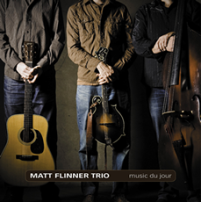
Music du jour
Copyright - Matt Flinner - All right Reserved